|
|
|
|
|
Oct 2014 |
|
|
|
Sat 25 Oct 2014
Ceramic Poppies at the Tower
of London. |
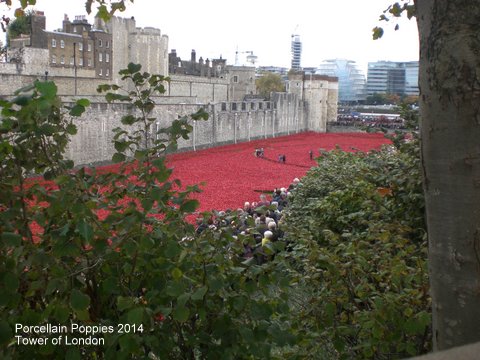
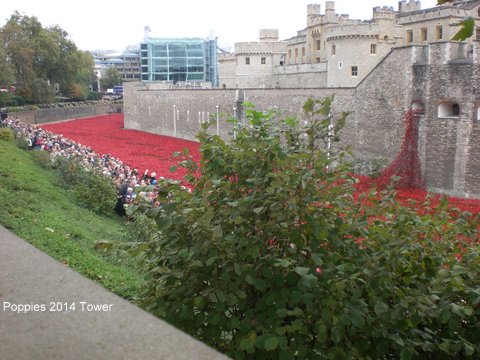
25th Oct. 2014,
visited London to view the ceramic poppies at the Tower.
There were literally hundreds of people there, all trying to
view from afar or join the queue to walk through them.
They are magnificent and a wonderful tribute to those who died,
during WW1.
Come Nov. 11th there will be 888,246 ceramic poppies in the
Tower of London's mighty moat , one for each of the British and
Colonial soldiers, sailors and airmen who perished in the Great
War.
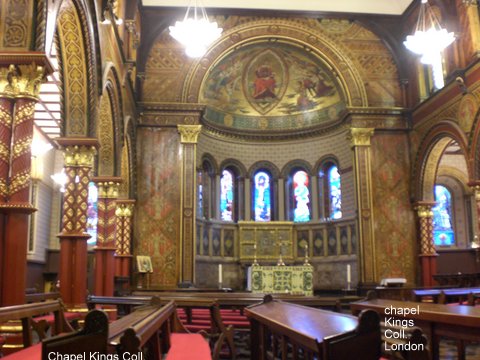
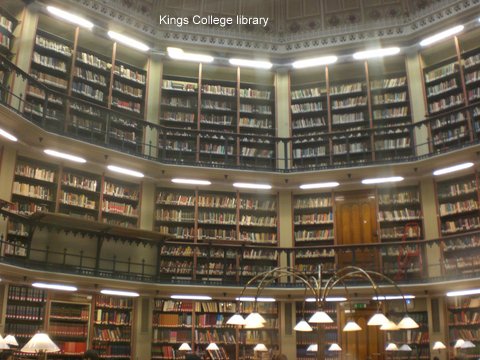
We also went into the library in Kings College, very impressive
and into the chapel also, which was awe inspiring.
We had a great day with our two grandsons, and ended up in the
Knights Templar bar, off the Strand, for a meal before leaving
for home.
J.D. |
|
 |
 |
 |
 |
| |
|
| |
|
|
|
Tue 21 Oct 2014
Visit to Ribchester Museum |
|
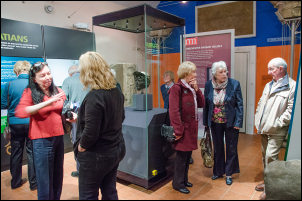
Members of
Chorley Historical and Archaeological Society were treated to a
special presentation at
Ribchester Museum to cover the Museum's centenary and also
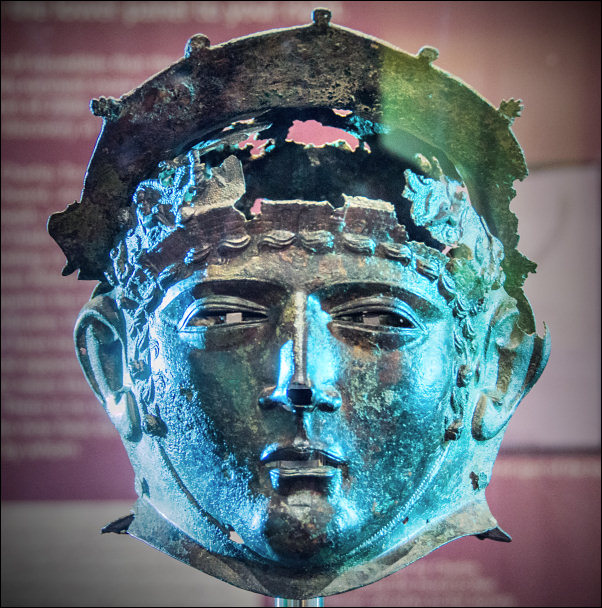
the return to Ribchester of the magnificent
Parade Helmet which was found in Ribchester in 1796. After
passing through local ownership it was purchased by the British
Museum where it has been on display since 1814.
The visit was organised in collaboration with the Friends of
Ribchester Roman Museum.
Patrick Tostevin, the Museum Curator, gave us a potted history
of the Museum, the Roman Fort and the return of the Parade Mask.
The mask is on temporary loan and returns to London in early
November 2014. |
 |
|
 |
|
The earliest
Roman fort in Ribchester was established in the early 70s AD as
part of a network of defensive forts across northern Britannia.
Originally of turf and timber construction, the fort was rebuilt
in stone in the mid to first century AD.
The fort accommodated a garrison of cavalry troops whose purpose
it was to patrol the surrounding area and keep the local
inhabitants under control. It was occupied into the fourth
century.
The helmet was discovered in 1796 by John Walton a local man,
along with about 30 other items which are still at the British
Museum. To maintain the security of the helmet a special case
had to be made and imported from Belgium. There were no suitable
cases available for loan in the UK. The cost was over £11,000.
After the presentation were able to view the helmet in its
secure case. A duplicate copy of the helmet was made about 100
years ago and this has been on display in the museum since then. |
|
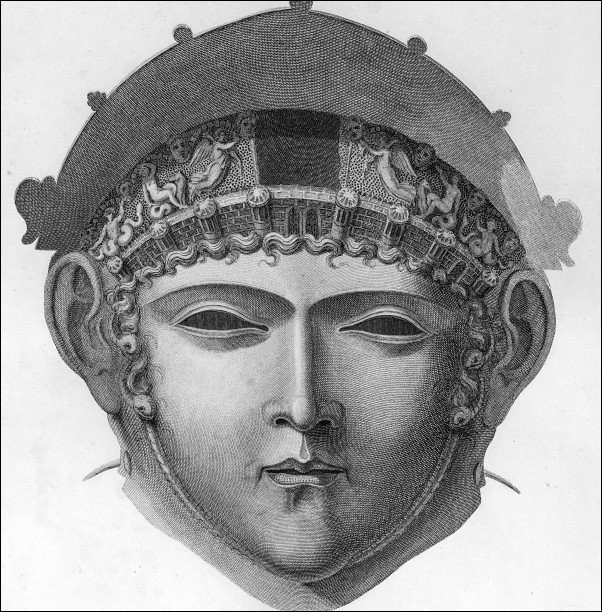
An engraving by James Basire for
Charles Townley. |
|
|
Battlefields
and Poppy fields - Steve Williams
Tue 14 Oct 2014 |
Steve made a
welcome return to the society as a departure from the scheduled
speaker to speak on the battlefields and poppy fields of both
world wars. Steve admitted his passion includes World War 1 and
the Chorley Pals involvement in it. His illustrated talk,
though, would cover, in chronological order, battlefield sites
in northern France and Belgium between the years 1914 to 1944.
Firstly, 1914 and the scene is the town of Mons, Belgium. It was
said to be the scene of the first and last shots fired in the
whole war. Indeed, there were fired only 10 feet apart from each
other of a plaque Steve showed. He told the story of the ‘Angel
of Mons’, which was said to protect British troops in their
retreat. It is a great story but, however, is a myth.
A battle which cost more Chorley soldiers’ lives than the Somme
was at Festubert in 1915. These lives, however, were those of
the men of Chorley’s territorials or the ’terriers’. These men
were called up in 1914 to fight alongside the regular army.
Verdun in north east France is important to French national
identity as this was the place where the Germans would not be
allowed to pass. A heavily fortified place that was important
enough for both armies to bitterly contest it between February
and November 1916. Steve commented on the totally different
atmosphere experienced at French war cemeteries than at British
and Commonwealth cemeteries.
It was an attempt to relieve the enormous pressure on the French
lines that the British initiated a large scale assault at the
Somme in July 1916. This, of course, became synonymous with the
Pals battalions. Chorley’s Pals accounted for a quarter of the
East Lancs and many of them were killed at the town of Serre.
Steve told of a story about a contemporary silent film made of
the battle at the Somme. Much of it was fake but the interesting
point was that women who worked in mills and factories, who
watched it, walked out. Not because of the violence in the film
but because of the bad language they could understand through
lip reading.
Other interesting points were of the Zillebeke British war
cemetery. A battalion of men from the City, many with
aristocratic connections, suffered casualties and the dead were
buried at this cemetery. Steve told of the body of a Brindle
lad’s body being exhumed from there, as he, supposedly, did not
deserve to lie at rest with these men.
Moving onto World War 2 Steve told of his father who was a
regular soldier and served at Dunkirk in 1940. There were more
Chorley connections with stories of Joseph Slater, who died at
Normandy in 1944. Also, of Stan Dickinson, who was shot and was
bombed there and is still alive today. More Chorley connections
were mentioned in respect of Arnhem and at Bastogne, the ‘Battle
of the Bulge’.
Steve concluded his talk with supporting images of the enormous
memorials at Menin Gate and Tyne Cot. His image of a field
blushed red with poppies and the poem ‘In Flanders Field’
brought his talk to a fitting end with reflections on the
millions who lost their lives in both world wars.
Peter Robinson |
|
Here's a note from John Harrison.
Please could the following note be put on the website?
Chillingham Castle.
Those who experienced our Society's tour around Chillingham Castle this
year will want to watch "You can't get the staff" on Channel 4 on
Tuesday 21 October. Part of the programme shows the attempt to recruit
an armoury polisher. The mind boggles, given what we saw at Chillingham. |
|
Amateur Diver
finds many objects on the bed of the River Wear.
Thanks to Lionel Walker for article and photos. |
|
The
Archaeologist
Gary Bankhead discovered and excavated the objects displayed in
this exhibition from the River Wear in the
centre of Durham City. He works as a Watch Manager in charge of
Green Watch at Durham Fire Station
and is currently studying for an MPhil at Durham University.
Gary made his first finds in April 2007 following a suggestion
from his wife Angela to investigate the river.
He and his brother Trevor found an ornate silver trowel buried
in the shingle on their first dive. Over the
past four years Gary has found over 3,500 objects in his
underwater searches.
|
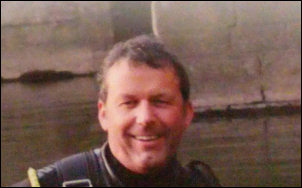
Gary Bankhead |
|
Recovering
these artefacts was no easy task. Gary had to endure
temperatures of 4-12°C during the
April-October dive season, working
with less than one metre of visibility. Recovering the objects
required meticulous excavation from stratified
layers of the riverbed whilst
surface traffic rumbled hardly three metres overhead.
Thanks to Gary's dedication, it is possible to gain a unique
insight into how people traded, travelled and
lived their daily lives in Durham
through the ages. Students, researchers and visitors to future
exhibitions will have the opportunity to
explore this story. |
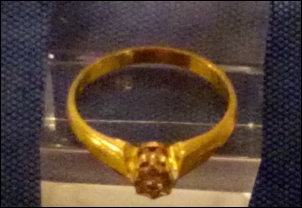
Gold ring with diamond 19th century |
| |
|
|
|
|
|
Sat 18 Oct 2014
1914 Commemorative Exhibition: Antarctic Witness
at South Ribble Museum. |
|
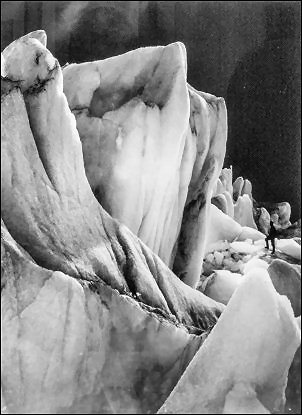
It is Frank
Hurley’s remarkable photographic record of Sir Ernest
Shackleton’s ill-fated Imperial Antarctic Expedition of 1914-16.
This is a centrepiece of the Borough’s commemoration of
Britain’s declaration of war, which broke out on August 4th 1914
as the expedition ship – Endurance – was making her way out into
the English Channel.
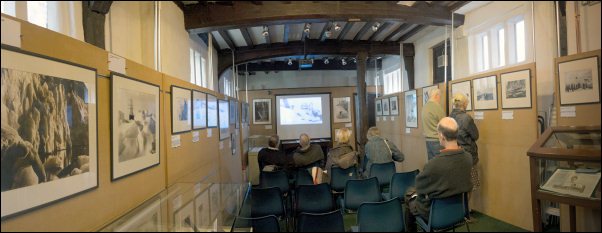
The exhibition
is due to close this week. |
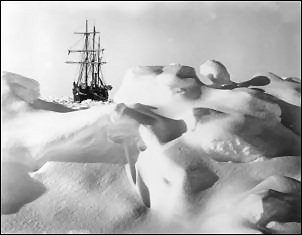
The Endurance. |
| The exhibition of
Hurley’s work is on loan from the Royal Geographical Society. It
has been seen in New York and Edinburgh and is also an important
contribution to the national celebration of the centenary of the
expedition itself.
There was a showing of the film
'South' the film record of Sir Ernest Shackleton's heroic but
ill-starred attempt to cross Antarctica in 1914-16.
This restored version of the film has been constructed by the
BFI National Archive from a wide range of materials. The BFI
National Archive has applied its own tinting and toning to match
the original prints, and has produced this handsome and richly
coloured testament to a remarkable episode in the history of
exploration. |
 |
|
 |
|
|
Fri 17 Oct 2014
Astley Farmhouse official opening. |
| The Astley
Farmhouse renovation was officially opened by The Mayor of
Chorley Councillor Roy Lees on as a dedicated space for
Chorley's Heritage and Cultural Community. |
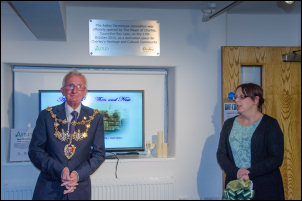
l to r: The Mayor Cllr Roy Lees
and Cllr Beverley Murray. |
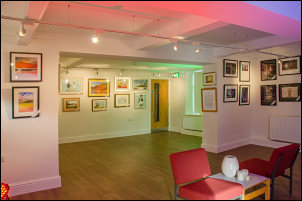
Downstairs is a
joint exhibition between Chorley Lodge Artists and Chorley
Photographic Society.
Upstairs will is '75 Years of Royal Ordnance Chorley' |
 |
| |
|
|
|
Wed 15 Oct 2014
The Community Archives and Heritage Group North West Conference
for 2014 “Better Together” |
|
 |
|
The Community
Archives and Heritage Group North West Conference for 2014
“Better Together” took place this week on 15th October at the
Lancastrian Suite, Chorley Town Hall. Special thanks goes to
Greenhalgh's Bakery who kindly provided a magnificent supply of
our local gastronomique, the Chorley Cake.
The event was
hosted by
Chorley Heritage Centre Support Group. |
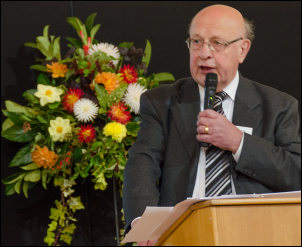
Lincoln Shields |
|
CHORLEY CAKE
Chorley’s eponymous cake is a flattened, fruit-filled pastry
cake. Not to be confused with its rival cousin the Eccles Cake
which is sweeter and made of flaky pastry, the Chorley
Cake is made of short crust pastry. It was often made as a means
of using up ingredients left from baking days. The filling is
usually of currants, so that it has been called Fly Pie!
However, it’s not unusual for sweeter fruits such as raisins or
sultanas to be used, or for sugar to be added to the currants.
Variants are almost as numerous as households in the town, so we
can forget about European Union protected-brand status! The
cakes sold in shops are usually 3-4 inches in diameter, but they
can be plate-sized. It is usually eaten with a liberal layer of
butter on top. Enjoy!
|
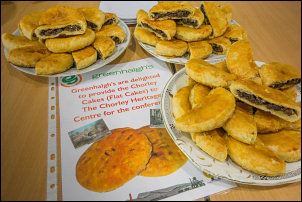
Chorley Cakes |
| |
|
|
|
 back
back