|
The
presentation began with a brief review of the early Himalayan
explorers, in particular the highest mountains in Nepal, the
highest being Mount Everest.
In 1856, the Great Trigonometric Survey of India established the
height of Everest, then known as Peak XV, at 29,002 ft (8,840
m). The current official height is 8,848 m (29,029 ft). It was
then officially the highest in the world. The mountain is also
known locally as Sagarmatha in Nepal and Chomolungma in Tibet.
Today's name of Mount Everest came from the Sir George Everest
who was the Surveyor General of India (1830-1843). He retired
before the altitude had been calculated and his name was used to
name the mountain by his successor Andrew Waugh. Everest never
saw the mountain named after him. |
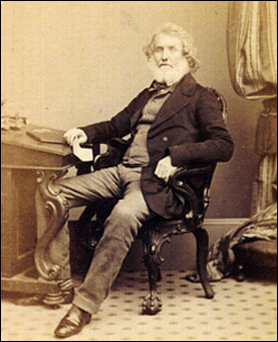
Col. Sir George Everest (1790 - 1843) |
|
Andrew Scott
Waugh (1810-1878) Surveyor General of India (1843-62) retired in
1862 was knighted and married Celia Whitehead of Uplands Hall,
Walker lane, Fulwood. He ended his career as churchwarden at
Broughton.
The first attempts to climb the mountain came from Tibet to the
north as Nepal was closed to outside expeditions until 1950. The
British made several attempts and in 1921 made a reconnaissance
trek from Tibet.
The first expedition to pass over Everest came in 1933 when a
British expedition flew two Westland bi-planes over the summit. |
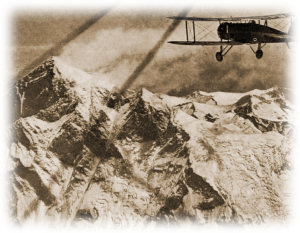
A Westland bi-planes approaches Everest in 1933 |
|
For many years
the remote Dolpo region of north-west Nepal was off limits to
trekkers. It is now possible to trek there with a special
permit. It was visited in the 1970s by the travel author Peter
Matthiessen who’s subsequent book of his trek ‘The Snow Leopard’
won national book awards in 1979 and 1980.
Dolpo preserves one of the last remnants of traditional Tibetan
culture. It can only be accessed via high passes which are
closed by snow for almost half of the year.
Boyd’s trip followed partly in the footsteps of Peter
Matthiessens’ journey over 40 years ago. Hardly anything had
changed with the exception of some villages having large solar
panel to power satellite communications.
B.H. |
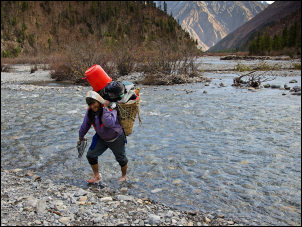
No bridges for river crossings |
 back
back


