|
|
|
|
|
Nov 2015 |
|
|
|
|
|
Wed 11 Nov 2015
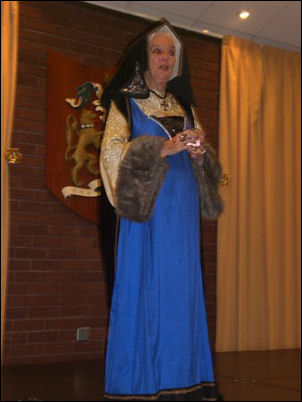
Lizzie Jones as Lady Margaret
Beaufort. 1st Countess of Derby |
|
Dressed in a costume that befitted a 15th century lady Lizzie
Jones made her annual appearance for the society. A fitting
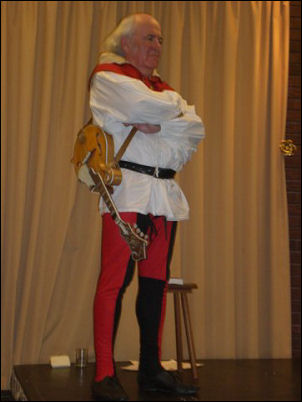
atmosphere was created by interludes of mandolin music in the
setting of St Laurence’s church.
As an only child of John
Beaufort, Duke of Somerset, Margaret became the richest heiress
in the country when he died. With royal blood flowing through
her veins, all her descendants were of the House of Lancaster,
her situation attracted special attention from the king. He
arranged for her to married at just 7 years old. However, at the
age of 12 he arranged another marriage for her, to Edmund Tudor,
aged 26 and soon became pregnant and gave birth to a son, Henry. |
 |
 |
|
Widowed at age
13 a third marriage was soon arranged but her son was left in
Wales to be brought up by an uncle.
Lizzie spoke in the first
person but occasionally raising a mask to her face she spoke in
a different tone that questioned aspects of Margaret’s life.
And her life was one of preparing her son to take his place on
England’s throne. Seen as a threat by the Yorkists, Harry was
sent to safety of France.
By her late twenties she was on her fourth marriage to Thomas
Stanley, her protector, and this was the beginning of her life
at Lathom House, near Ormskirk.
She continued to plot her
son’s return and the then king, Richard III, accused her of
treason. Due to her husband’s connection with Richard she
escaped death.
With the twists and turns of the Wars of the Roses, Richard met
his death at Bosworth. Thomas Stanley’s army was decisive in
winning the day for Henry, Margaret’s son. He went on to become
Henry VII and Margaret was instrumental in his marriage to
Elizabeth of York, so creating peace between the two warring
factions.
It is not without foundation that Lizzie said
Margaret was the most important woman of the age. The night was
another success for Lizzie.
Peter Robinson. |
|
|
Tue 10 Nov 2015
William Taylor on Private
William Tomlinson – Indian Mutiny
and the Second Opium War |
|
|
|
Although advertised as a talk about
Private William Tomlinson and the Crimean war, William announced
at the beginning that his talk would, in fact, concern the same
man and action he saw in the Indian Mutiny and the Second Opium
War.
William told how William Tomlinson’s army pay book came into his
possession and the information it held about this soldier’s much
travelled army service. |
Born in Salford in 1831 he
became a ribbon weaver trader by trade. It’s uncertain why, but
in November 1857 he enlisted in the army, whilst living in
Macclesfield.
By mid 1858 he had joined his regiment in India
and saw action towards the end of the Indian Mutiny or as the
Indians called it, the First War of Independence. William spoke
of the complex set of circumstances that led to the conflict in
India that included, the British attitude and treatment towards
Indians, rebellion against the British run East India Company,
religious slights and conflicts within private armies.
Following this he transferred to the East Surrey Regiment and
sailed to China, by this time experiencing the second of three
Opium Wars. Britain had a central role in initiating conflict
with China due to its disdain towards British overtures to sell
them goods. Britain turned to opium as means of trade with
China, which the Chinese fought against. |

Bill Taylor |
Other foreign powers joined Britain in trying
to force the Chinese into opening up for trade. Private Tomlinson was
part of an Anglo French force in 1860 that took Peking (Beijing) and
sacked its Summer Palace. For the Chinese the Opium Wars heralded its
century of shame, as they call it, due to foreign intervention in its
own affairs.
As
for Private Tomlinson he stayed in China until late 1863 and bought
himself out of the army for £18 on his return to England the following
year.
An
enlightening evening, not just about the life of a soldier in the 19th
century but of the impact Britain had on other nations that have not
forgotten what we did.
Peter Robinson |
|
Sun 22 Nov 2015
Lucas Green Anti-aircraft gun
base, Whittle-le-Woods. |
|
|
|
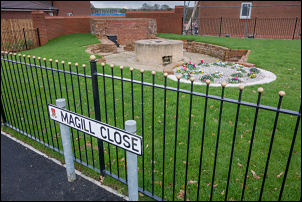
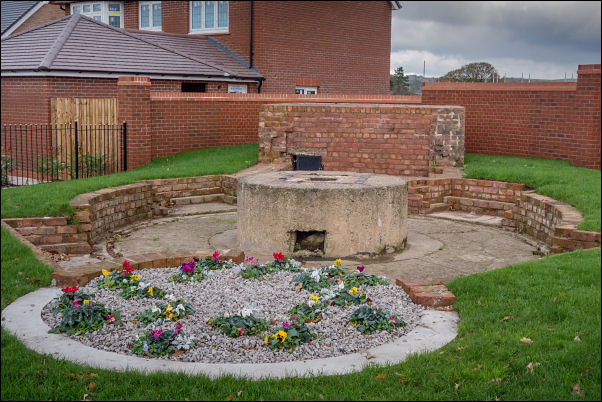
The Lucas Green Anti-aircraft gun base, Whittle-le-Woods has
been excavated and preserved within the new Redrow Housing
development. It was excavated in Feb 2013.
Access is via the
A6/Dunham Dr roundabout just north of the Moss Lane junction,
Whittle-le-Woods. Leave the A6 then turn left onto Dunham Road
and keep going to the new Magill Close.
|
|
|
|
|
 |
|
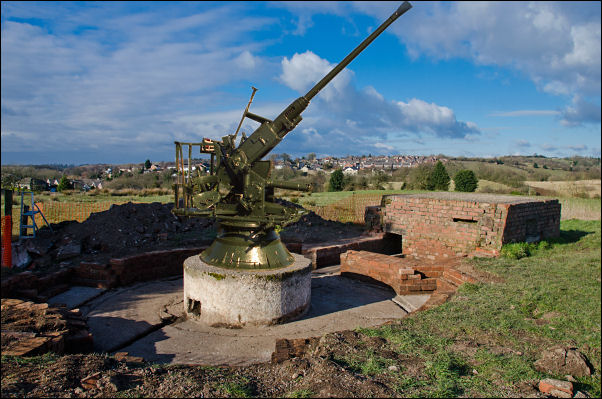
The excavation in 2013 with a Bofors gun superimposed. |
|
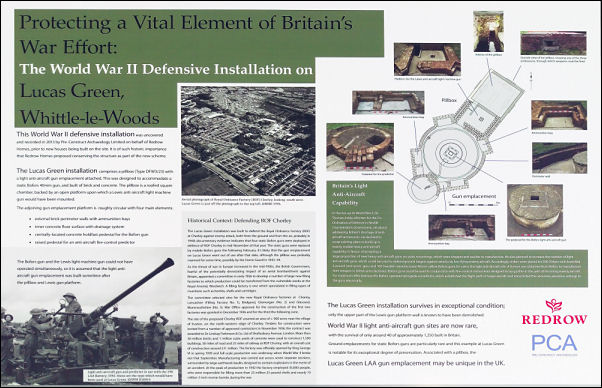
The information board. |
|
|
Nov 2015
Eaves Lane Bus Depot, Chorley |
|
|
|
Many thanks to CHAS member John
Harrison for scanning in
the
attached document about the closure of the Eaves Lane Bus
Depot, Chorley. John obtained permission from Chris Nelson of
the Ribble Vehicle Preservation Trust to use the document. |
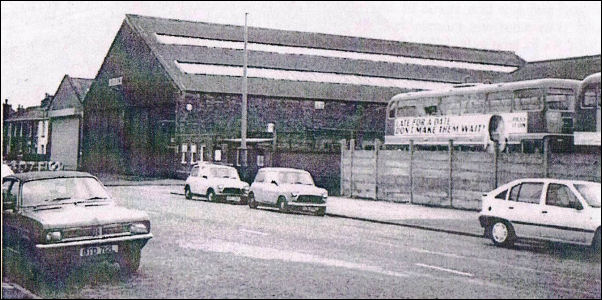 |
|
|
|
|
 back
back