|
Another large audience greeted
David, a freelance historian from Bolton, who described
Lancashire as predominantly rural in mid 17th century, with a
population of around 150,000.
The county was affected by the civil war, which was, a conflict
between Charles I’s supporters, royalists also known as
cavaliers and parliament supporters, known as roundheads.
There were 774 ‘gentry’ families in the county at that time and
about half had no allegiance. When conflict came, however, it
was 2 to 1 for Royalists but there were splits within families
too.
There was also a sectarian factor as to which side families
supported, Catholics generally sided with the king and
Protestants with parliament. James Stanley, Lathom House near
Ormskirk, was one of the most prominent royalists.
Other leaders emerged from the gentry and both sides looked to
raise troops because there was no standing army.
The first known person, Richard Percival on parliament’s side,
to be killed in the conflict happened in Manchester in 1642.
Royalist forces had entered the town in search of its magazine,
they left empty handed but blood was spilt.
1642- 46 Standards were raised by both armies at Edge Hill,
Warwickshire, which became the site of the Civil War’s first
major battle. |
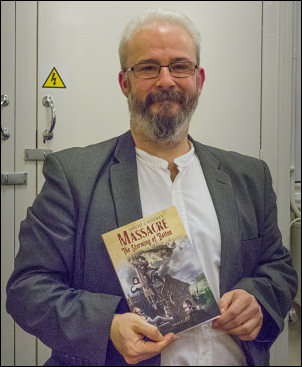
David Casserly with his book
'Massacre - the storming of Bolton',
sadly now out of print. |
Charles I, who had started a new war and lost, paid the ultimate
price by losing his head in 1649.
1651 – Charles Stuart, son of Charles I, rallied the Scots to
invade England, which meant Lancashire, and he was proclaimed
king in August. Skirmishes took place in the county with the
royalists being put to the chase near Wigan later that month.
James Stanley, now Lord Derby, fled to Worcester to join the
king, where in September his forces were defeated. Lord Derby
was tried for treason and convicted, then executed in Bolton.
David’s talk was excellent in that he put the whole conflict
into chronological order describing all the characters and the
places and events they were involved in.
[The executioner of Lord Derby was George Whewell (Whowell) and
his skull, allegedly, is on display in the Pack Horse Inn,
Affetside.
This link should give you the details.]
Peter Robinson |

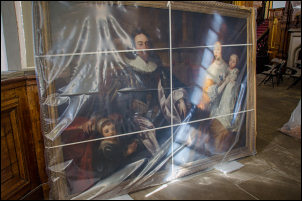
James Stanley
7th Earl of Derby |
 back
back